The First Treasure from the Gift of the Four Treasures
Last week I received a beautiful gift from a very special person who has returned home to Vancouver from China to complete her studies. Her surprise gift to me from Beijing could not have been more perfect and timely, as I have fallen in love working again with ink and watercolour as those of you who follow my blog know well.
The gift has also introduced me to a piece of Chinese culture and history with which I was not familiar and which I would like to share with you today: The Four Treasures of the Study, which is the translation of the Chinese characters on the top of the presentation box.
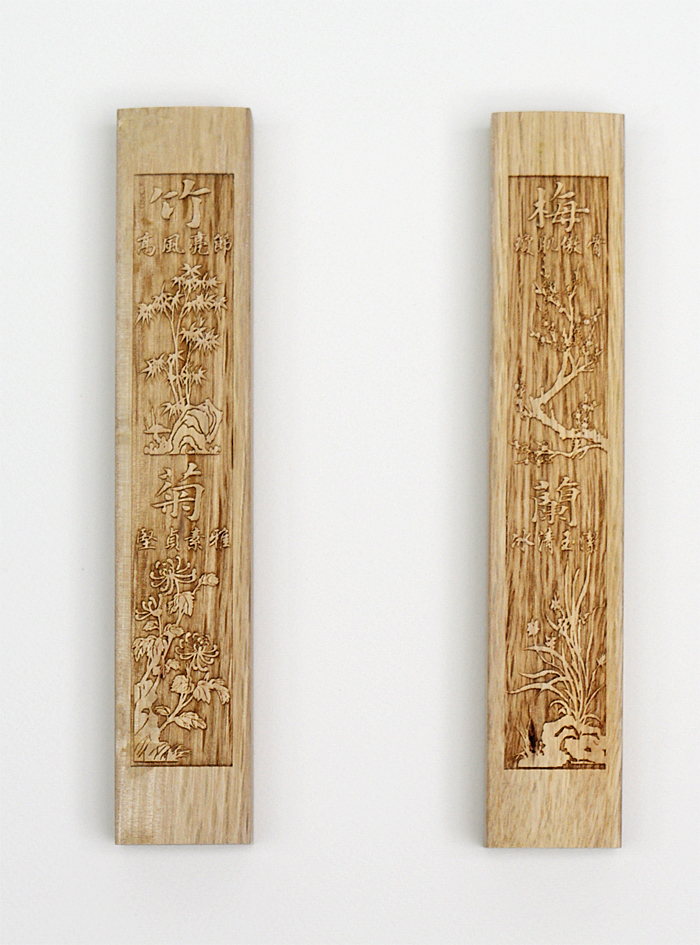
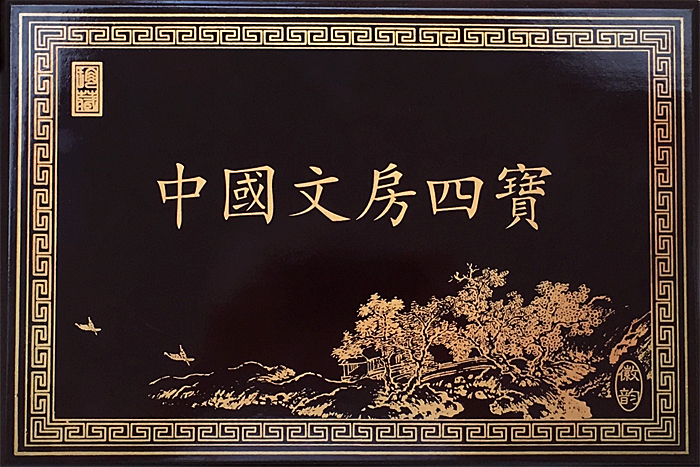 When I opened the box here were the Treasures of the Study beautifully displayed: brushes, ink, inkstone and carved paper weights representing paper and used to hold the paper down.
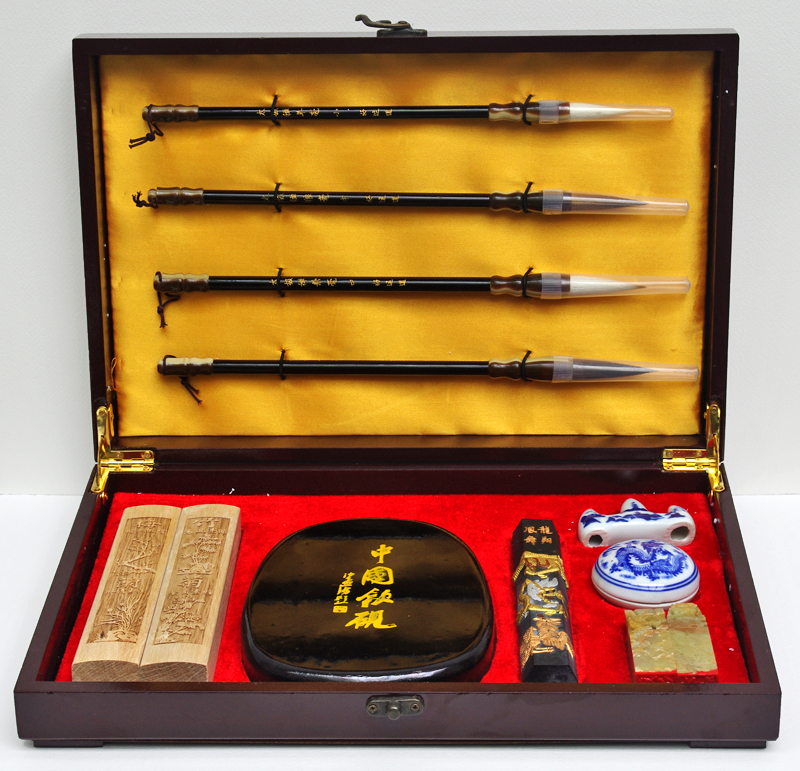
This discription of the Four Treasures, and others to follow, are from the China Online Museum:
“Four Treasures of the Study (文房四宝 wén fáng sì bǎo) is an expression used to refer to the ink brush, inkstick, paper and inkstone used in Chinese calligraphy and painting. The name stems from the time of the Southern and Northern Dynasties (420-589 AD). Brushes and ink are two of the legendary “Four Treasures of the Study” tools of Chinese calligraphers, painters and poets over thousands of years. The other vital elements of culture are the rice paper (zhi), and the inkstone (yan) for grinding the solidified inksticks.”
Here you can see the inkstone and inks in greater detail. The larger ink stick has two engravings on its surface, a dragon and a phoenix. The second and smaller stick has an orange blossom motive.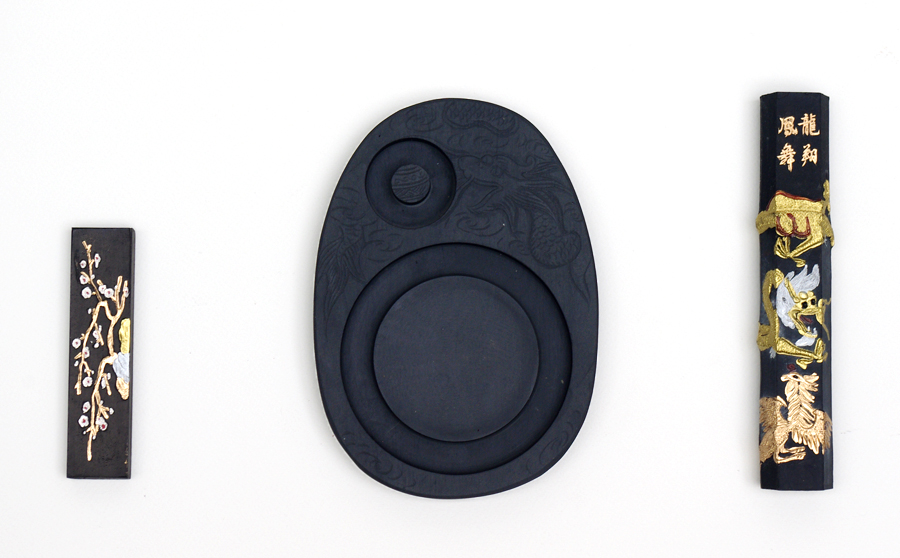
“The ink (mo) is commonly made by burning pine or another wood in an earthenware container, mixing dense ash with glue, and compressing it into an ink stick, or another form. An unusual antique piece of ink is shaped like a ruyi, a scepter tribute offering, that conveys wishes for happiness and good fortune. After shaping, it takes about two years for the ink to dry, in a totally dry and dark environment.”
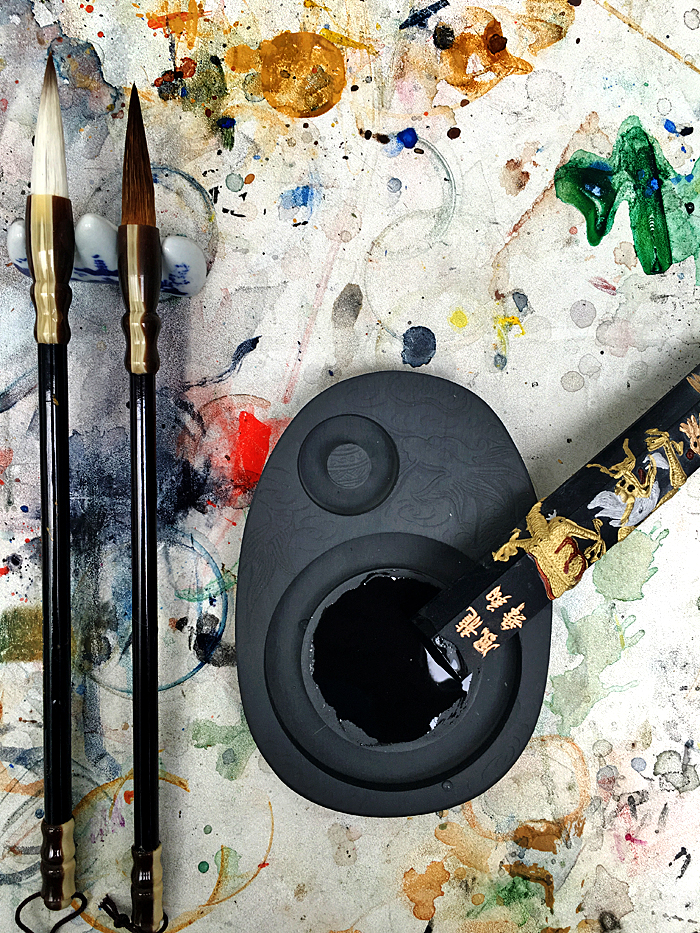
“An inkstone is literally a stone mortar for the grinding and containment of ink. Traditional Chinese ink is usually solidified into sticks for easier transport and preservation. Water is usually kept in a ceramic container and sprinkled on the inkstone, which has a generally flat surface. The inkstick would be ground with the flat surface of the inkstone. By mixing ink with different amounts of water, the calligrapher or artist can create different densities and innumerable shades of black and gray.”
An additional box of five different coloured inks was included with the gift, each with a dragon motif once again.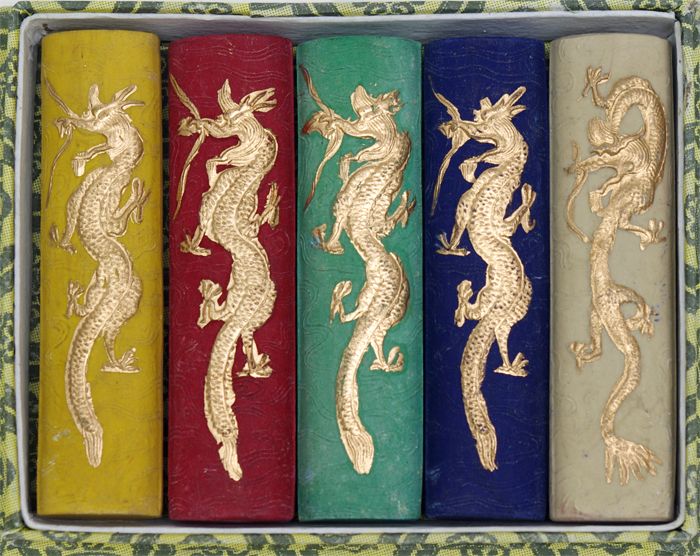 The beautifully carved paper weights have engraved into the wood, bamboo, chrysanthemums, cherry blossoms and orchids
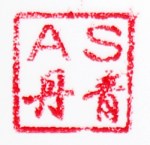
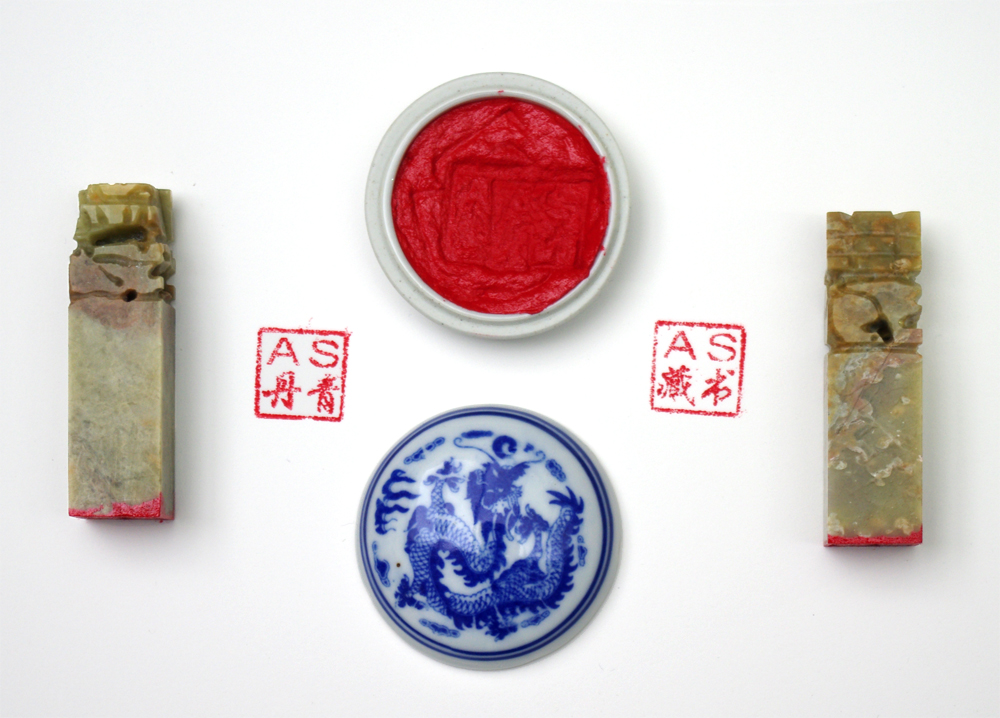
 These carved ink seals were specially made for me, one for my library books and the other for my paintings. How lucky am I?
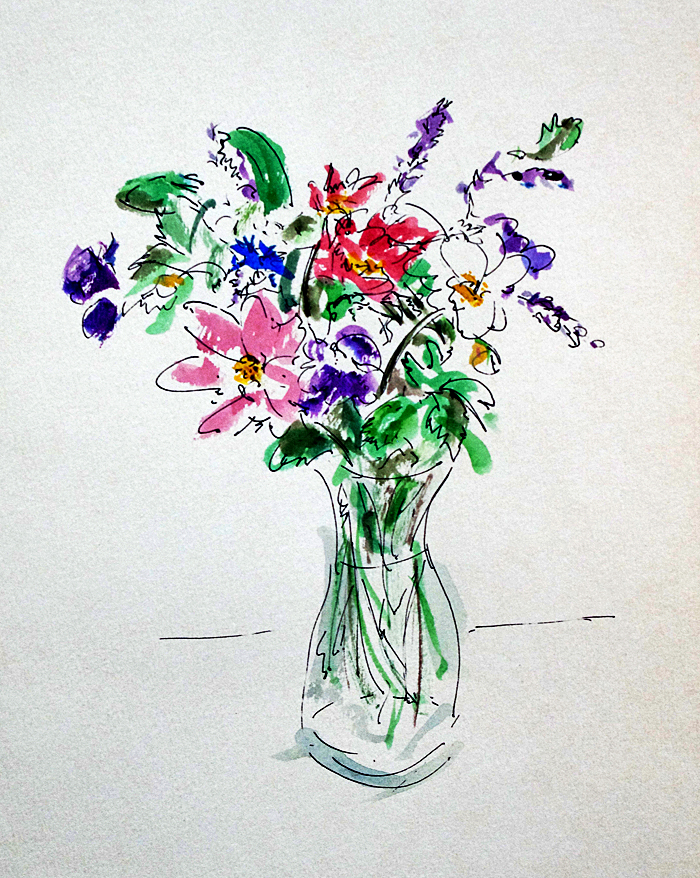
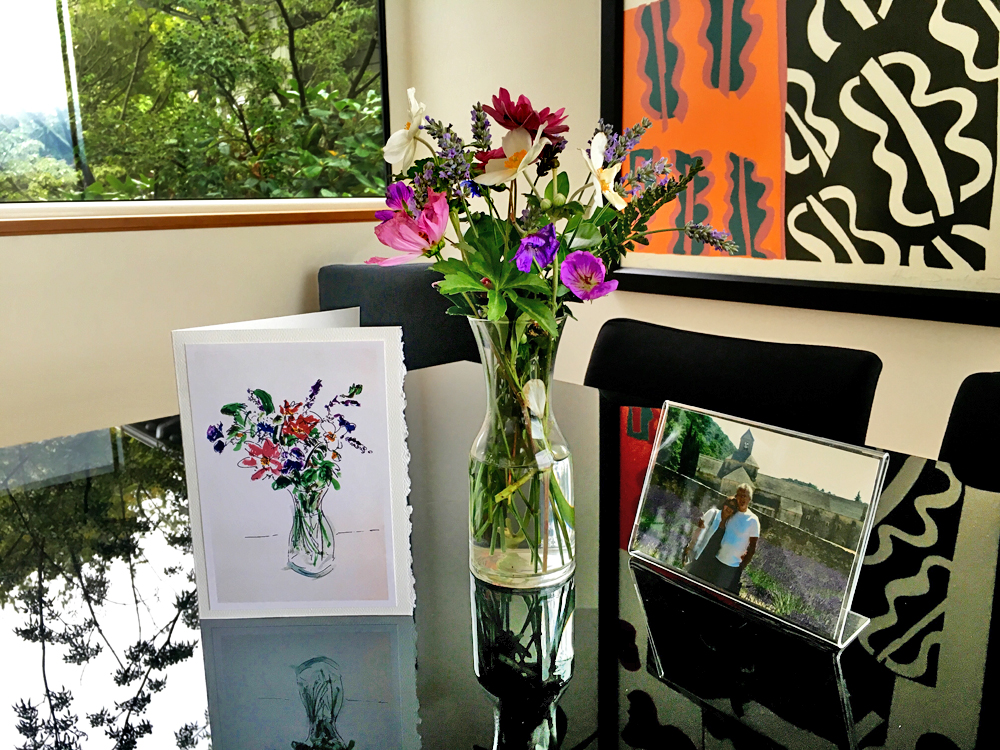
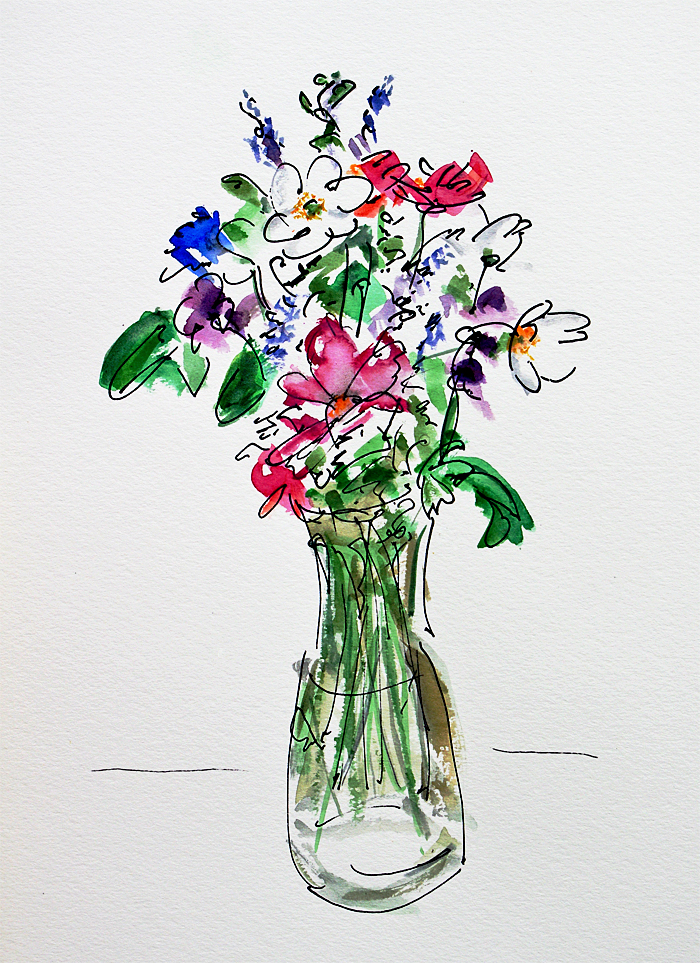
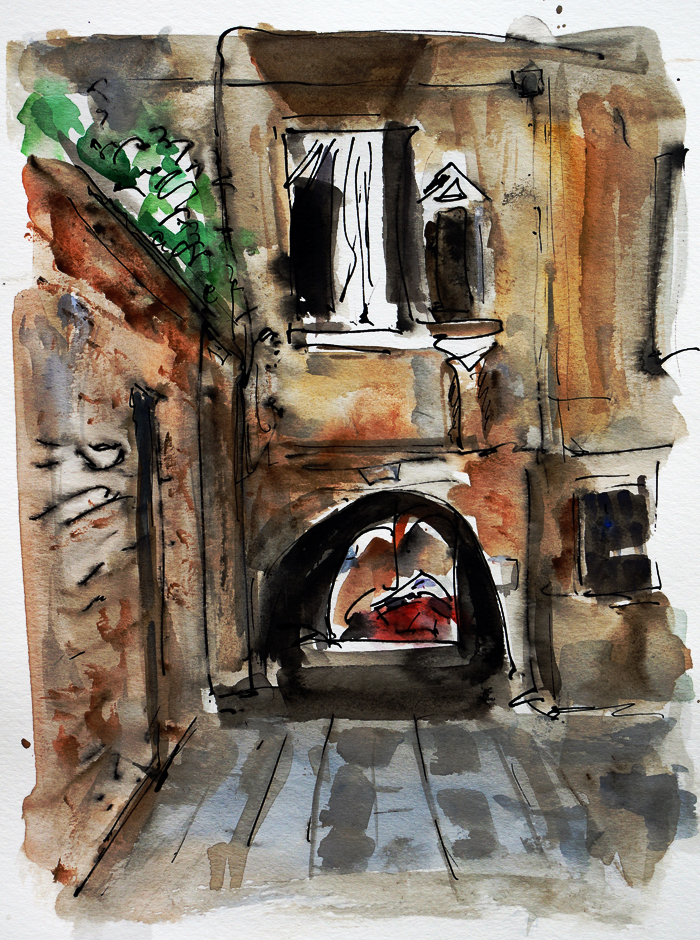
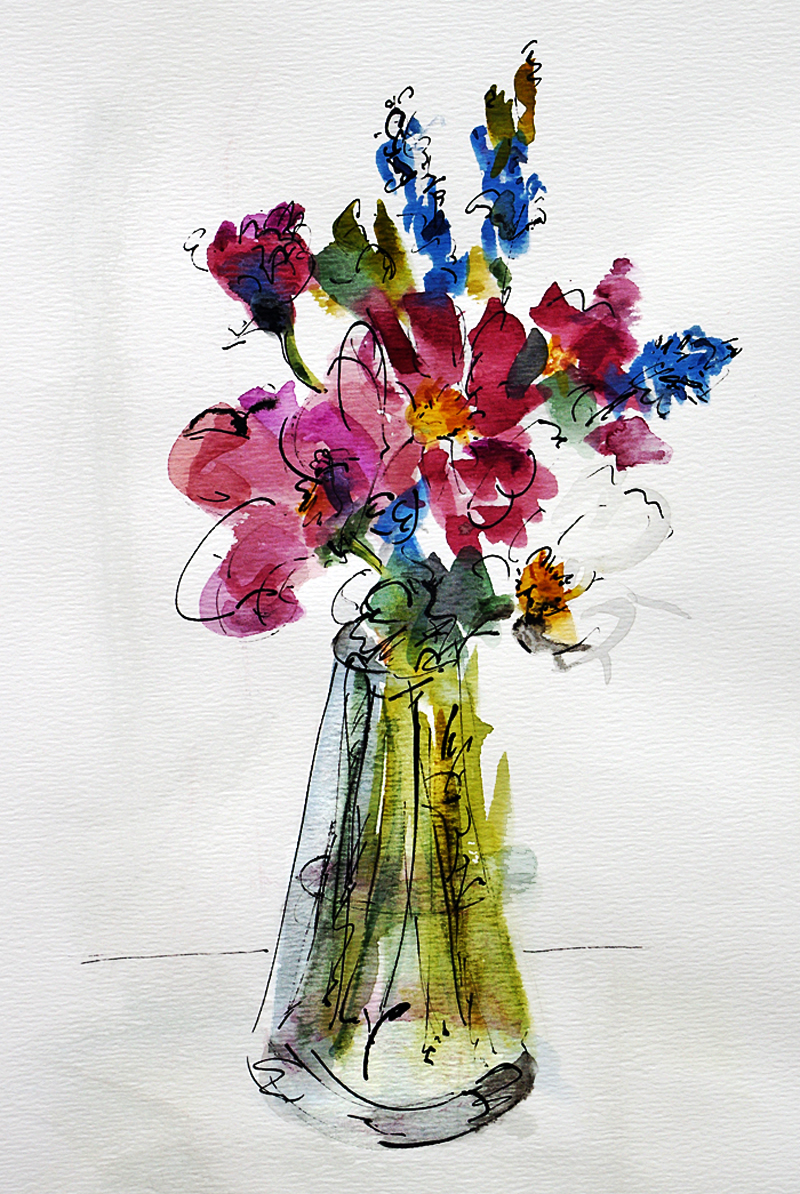
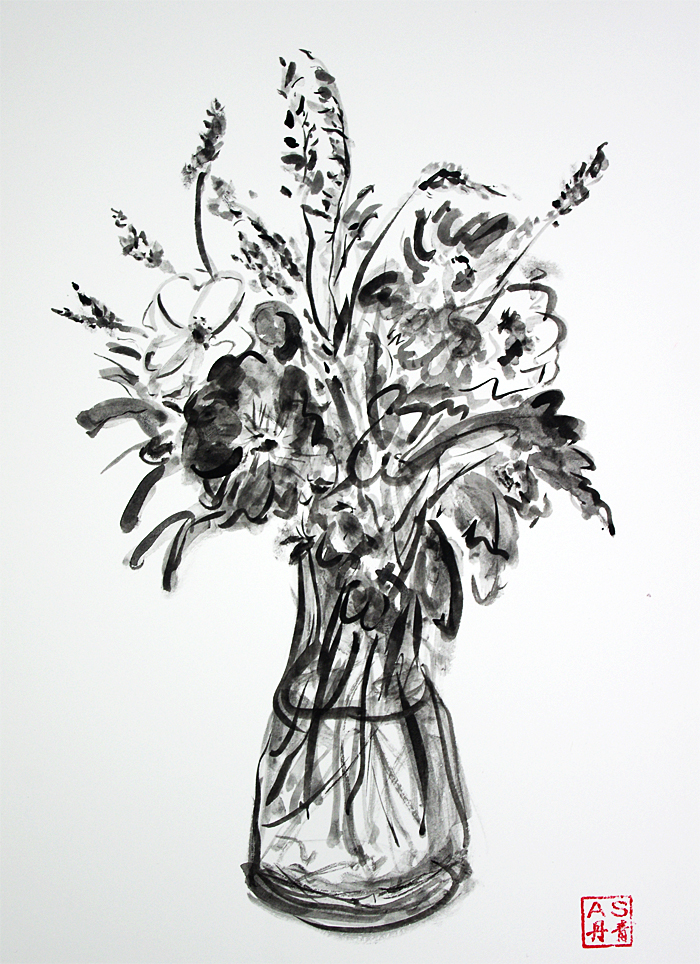
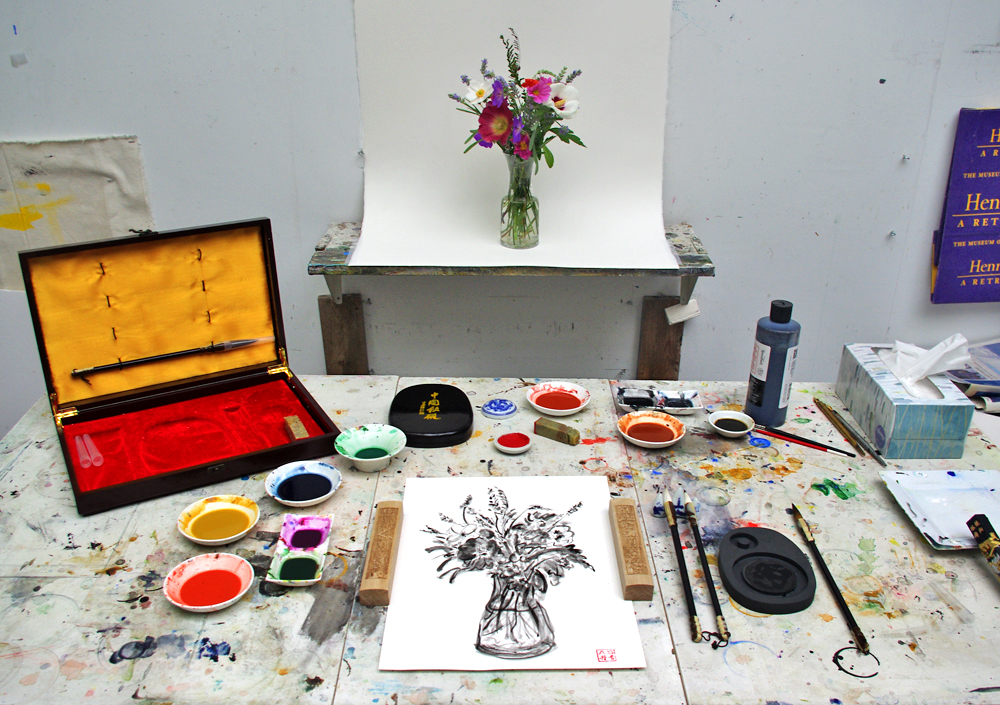
As you can imagine I was eager to begin using the Treasures, to grinding the ink and to letting the brushes sing and dance across the paper, and what better way to start than with the bouquet I had picked from the garden and posted on the First of September.
“The traditional brush (bi) can be traced back to the neolithic age, but became recognized during the Warring States Period, in 476 to 221 BC. It was improved by Meng Tian, a general of the Qin Dynasty, in 221 to 206 BC. Brushes are made of animal hair, usually attached to a bamboo stick. Various kinds of animal hair were once used, like goat, ox, rabbit, sheep, marten, badger, deer, wolf, each having certain properties. They can be categorized by their size: large, medium and small; and also by the strength: soft (usually taken from goat), medium (taken from rabbit, or a mixture of goat and weasel hair) and hard or stiff (taken from weasel tail). Hair of different animals can be combined to create different textures.”
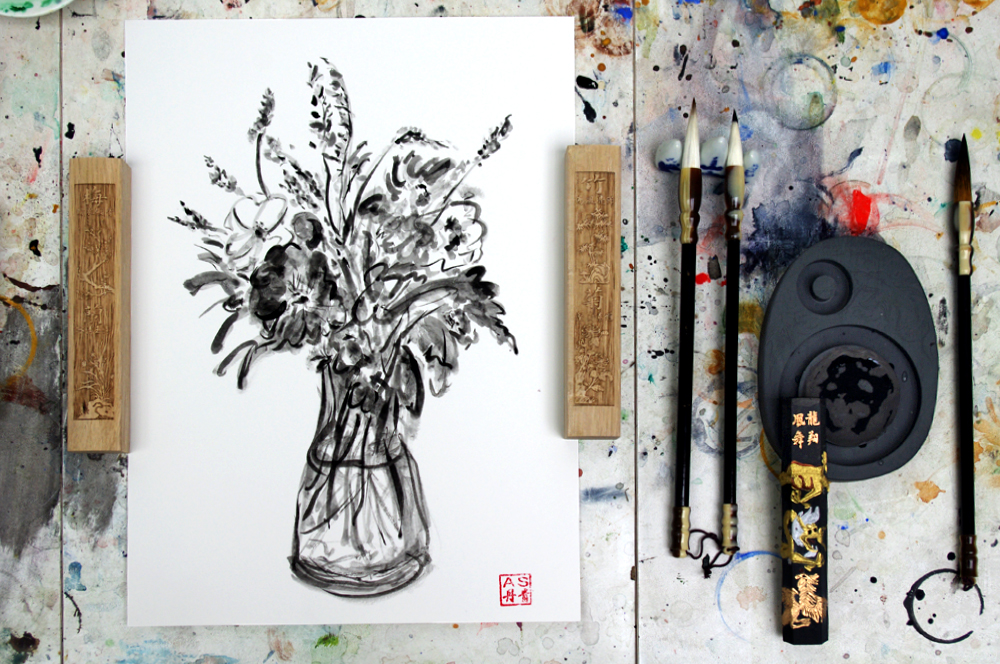
Thank you Charmaine for this beautiful gift, which I will treasure always.
This First Treasure is for you.